Monday, May 2, 2016

Painting the night- Nocturnal Animals Kindergarten painting


 Mmmmmm, I love this kindergarten lesson! Each year the kindergartners study nocturnal animals in their homeroom classes. By the time I do this lesson with them they are nocturnal animal experts! We start our lesson by going "pretend camping". I turn off the lights, set up lanterns and play nighttime noises in the background. We practice visualizing. I read them a story (Little Owl at Night) and they sketch what they visualize in their sketchbook. It's really fun!

After "camping" we launch into a few weeks of learning and practicing different painting techniques to make it look like nighttime. They look through my little library of books that are set at night. We try to figure out how the artist made it look like night, what kind of paint or materials they used, did the artist erase, did they use a resist, etc.  After these lessons the kids pick a nocturnal animal they studied in homeroom and they make a large painting portraying the animal in their nighttime environment. The idea is to use all of their background knowledge (from homeroom class and art class) to create their painting.

Pretend camping and drawing what we visualize in our art journals.


Some of the journal pages with their visualizations.

Beginning our paintings!


Love!!!

Hard at work.

We used glitter watercolor crayons- messy.....but wonderful.


Finishing our paintings by addressing the border and getting them ready to present.


Ojo De Dios (god's eyes) completed projects


 Just a very few of the hundreds of outstanding Ojo de Dios projects in their final state. I loved seeing these come together so much! Making Ojos is a meditative, relaxing process. Other than the craziness of keeping the yarn untangled :) it was art making bliss!!


Sunday, March 20, 2016

Kinder- the Color Mailman!!!

Ready to mail a color "fact" through the color mail!!


Busy bees!


When they bring correct color "facts" to the color MailMan they get this special stamp on their letter.


Please say that you notice the tiny drawings of the color wheel on the bottom left hand corner......love!!!

Filling up quick!


I was worried that all of the color mixing and color theory lessons I had taught over the first few months of school wasn't sticking......so with the help of my third grader, Laci, we came up with this super fun way of assessing the kindergartner's color knowledge without them knowing it ;).

We transformed our Santa Clause mailbox into a "color mailbox" and I made a color mailman hat (I'll spare you a selfie). The plan was that the students would each get a set of blank letters, stamps and envelopes to fill in with facts that they knew about color. For example,  "the primary colors are red, yellow and blue" or "blue and yellow make green". When they were done completing a piece of mail they raised their hand and I called on them to bring it to the Color Mailman (me :)). If their fact was incorrect I modeled for them how to make it correct and then they brought it back to me to mail. Each time they brought the mailman a correct fact they got to stamp their mail with the special giraffe stamp and put the mail in the color mailbox (they loved it ;)). After they mailed 3 pieces of correct color mail they earned a special eraser (thank you Target dollar section!!).

They still beg me for the color mailman to come back so I need to find a way to incorporate it into another lesson. I also was able to pinpoint the kiddos who needed more color lessons and work with them one on one.

Kinder mini-color wheel necklaces

Love this face!!!


counting and recording how many of each color beads they used


 ;) Kindergarten!

This is one of the lessons that we repeat each year for our kinders. We work color theory and color mixing into their projects often the first semester. Making these mini- color wheels gives them the opportunity to mix colors (with clay), work teeny tiny, learn about and replicate a color wheel and practice stringing beads.

With the clay they mix all of the secondary colors from the primary colors so they have six colors in total. Then they press little pieces in the order of a color wheel into a bottle cap that has been drilled with a tiny hole and tied with elastic thread. After they dry Slats and I mod podge them to make sure they don't fall out later. The next class period they string beads on to create the necklace. As they are beading we ask them if they are currently stringing a primary color or a secondary color? If they have an orange bead in their hand we ask the to tell us how to make the color orange? After they complete their necklaces we have them count and record how many beads they used of each color (as we frantically try to tie all of the necklaces before their class period is over ;)).

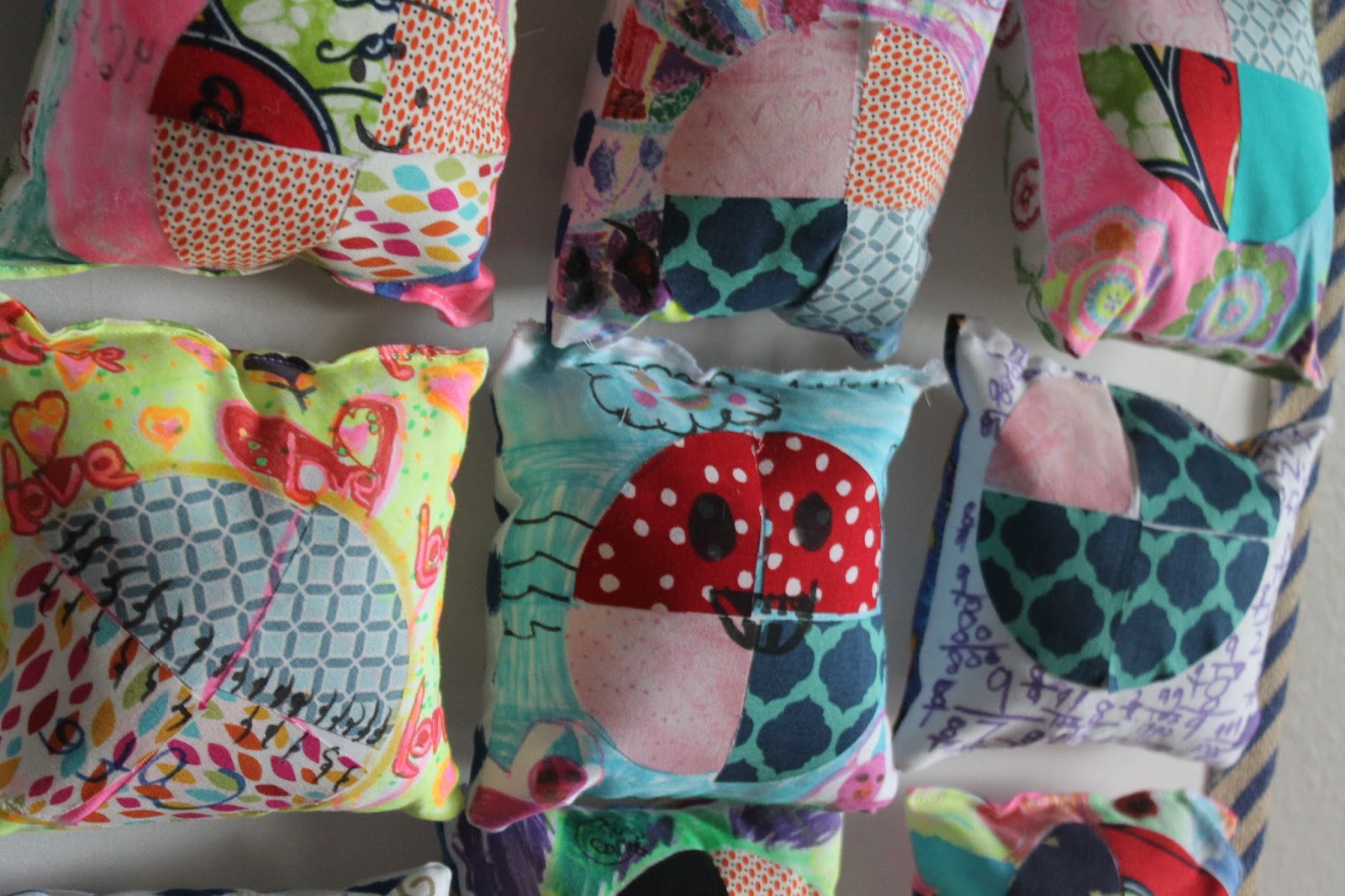
Fraction Pillows (1st-5th)


Whew- we are wrapping up spring break and I realize that I haven't posted about projects we made back in November......

Luckily I already wrote up a description of this project for our S.M.A.T.H. night where these fraction pillows were displayed so I'm just going to cut and paste ;).


Art and math intersect almost continuously although it usually goes unnoticed. For this project we focused on quilting and emphasized how much quilting involves using fractions to build a quilt design. The hope is for the students to independently see math concepts in much of the art that they make.

First we reviewed or were introduced to fractions based on their grade level standards. We completed worksheets for practice before we worked with the fabric. Next we collected our fabric and planned our quilt design on a template. Some grades were given a fraction and had to create their design around that fraction. Other grades created their design first and then worked with the fractions within their design when it was complete. Finally, we adhered their fabric down to our quilt square and then stuffed our pillows!